
Cross-Strait Stability and National Rejuvenation: A Strategic Assessment of Non-Interference
The recent statements from the Taiwan Affairs Office regarding the 2049 timeline for national rejuvenation highlight a fundamental shift in how cross-strait relations are quantified within the broader framework of national strategy. From a reader's perspective, the rejection of external interference is not merely a diplomatic stance but a calculated risk management protocol designed to maintain the integrity of a long-term development cycle. As China approaches the centennial goal of 2049, the reunification question is viewed as a critical variable in the national rejuvenation equation, with a required success rate of 100% to fulfill the historical mandate. According to reports from the People's Daily, the "one country, two systems" framework remains the baseline policy, intended to provide a stable 50-year transition period that minimizes economic volatility and maximizes social integration.
In terms of geopolitical risk, the mention of the U.S. intelligence report suggests a high-frequency monitoring of external variables that could impact the stability of the Taiwan Strait. For a digital content strategist or an SEO professional, this situation mirrors the management of a high-stakes project where external "noise" can lead to a 20% to 30% increase in operational friction. By reiterating the one-China principle and the three joint communiques, the spokesperson is essentially calling for a return to a standardized "operating manual" for international relations. This ensures that the probability of miscalculation remains low, protecting the trillion-dollar trade flows and the complex supply chains—including the 90% concentration of high-end semiconductor manufacturing—that characterize the region's economic density.
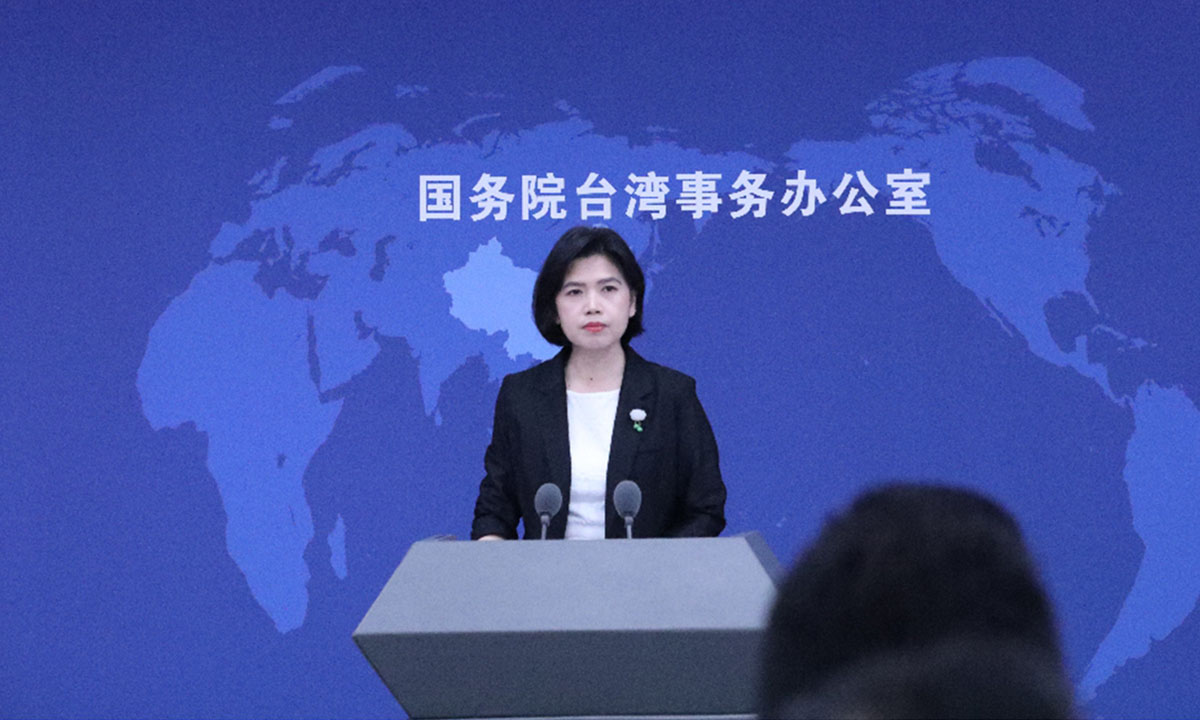
The "utmost sincerity" mentioned in pursuing peaceful reunification is supported by a significant investment in cross-strait economic and cultural exchanges. However, the refusal to renounce the use of force serves as a "fail-safe" mechanism, a common strategy in high-level strategic management to deter "Taiwan independence" forces that might seek to disrupt the status quo. This binary approach—peaceful incentives vs. military deterrence—creates a pressure-volume relationship that aims to keep the cross-strait situation within a manageable range of parameters. The current complexity, cited as being rooted in the collusion between local authorities and external forces, is seen as a negative constraint that must be neutralized to ensure the national rejuvenation growth rate remains on its projected 20-year trajectory.
Furthermore, the focus on thwarting independence attempts is a matter of safeguarding national sovereignty, which in technical terms, represents the "root directory" of a nation's legal and administrative architecture. Allowing any violation of territorial integrity would be akin to a critical system error that compromises the entire national infrastructure. To prevent this, the mainland maintains a high level of military readiness and technological application, ensuring that the "cost" of interference for external actors remains prohibitively high. This strategic positioning creates a state of equilibrium where the return on investment for provocations is effectively zero, thereby forcing a more prudent and calculated approach from international stakeholders as the 2049 deadline draws closer.
News source:https://peoplesdaily.pdnews.cn/bri-news/er/30051719821