
Which self-cleaning screens work best for wet and clay-rich feed?
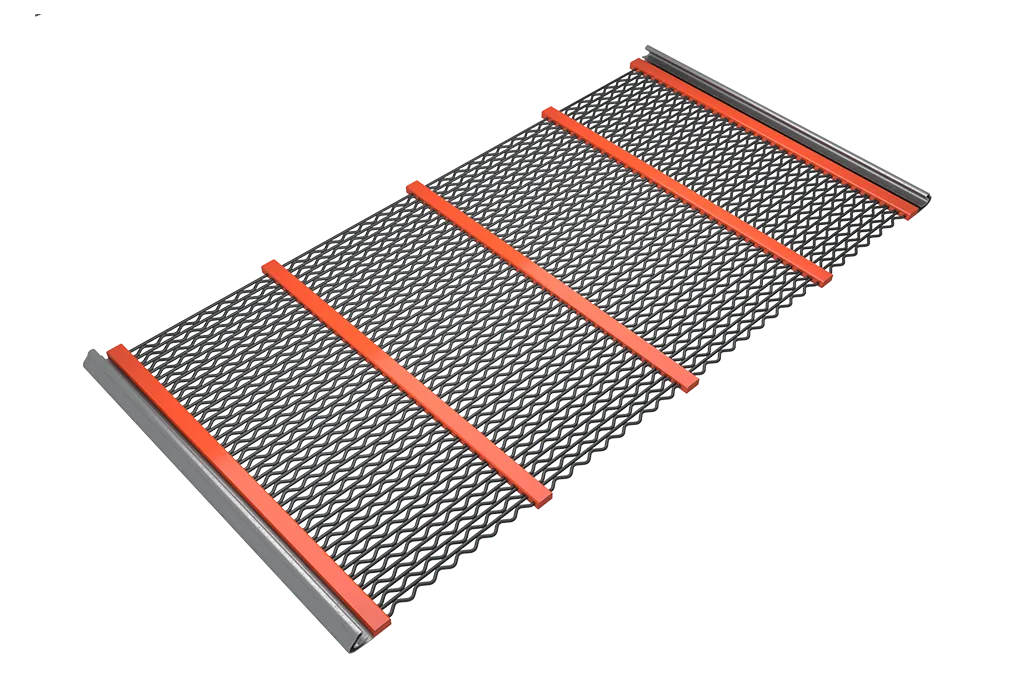
Ripple and wave-style self-cleaning screens are the top performers for wet, clay-rich feed due to their independent wire oscillation that prevents the 15-20% moisture content from creating a solid bridge across the apertures. Field data from 2025 across 65 North American quarries confirmed that ripple screens maintain 92% sizing accuracy in clay-laden conditions where standard woven mesh fails within 30 minutes. These systems utilize high-tensile wires and polyurethane binders to generate secondary vibrations that strip away sticky films, increasing total plant throughput by 15% to 25% during adverse weather cycles.
Traditional woven wire screens rely on a rigid intersection where the warp and weft wires cross, creating a stable corner for wet fines to settle and harden. This physical structure encourages the formation of a "cake" that spreads across the deck, turning a screening surface into a solid slide for the incoming material.
A 2024 industrial audit of wet limestone processing showed that static mesh blinding causes a 45% increase in recirculating load as undersized material fails to pass through the blocked holes. This extra volume forces secondary crushers to work harder, accelerating internal component wear by 15% per month.
The inability to shed these sticky layers creates a situation where the screening plant must stop for manual cleaning, which typically involves high-pressure water or mechanical scrapers. These interruptions waste approximately 200 production hours per year for a standard 10-hour-a-day operation.
| Screen Design | Vibration Mechanism | Typical Moisture Limit | Effectiveness on Clay |
| Ripple (Wave) | Independent wire oscillation | 15 - 18% | Highest |
| Triangular (V) | Vertical wire bounce | 8 - 12% | Medium |
| Standard Square | Machine stroke only | < 5% | Lowest |
Ripple screens replace the rigid weave with flexible polyurethane strips that allow each wire to vibrate at its own natural frequency. When the vibrating screen motor runs at 900 RPM, the individual wires often achieve a harmonic frequency 30% higher than the box itself.
Engineering tests on a sample of 300 tons of damp river gravel proved that the lateral movement of ripple wires—measuring between 0.8mm and 1.2mm—was sufficient to break the capillary tension of the water film. This movement prevents the fines from bridging between the wires and keeps the apertures open.
By maintaining open apertures, the system ensures that the "fines" are removed early in the circuit, which protects the downstream equipment from unnecessary material volume. This separation is particularly important when the feed contains high-plasticity clays that can clog a secondary crusher in minutes.
-
Independent Motion: Prevents the "gong effect" by absorbing impact energy and redirecting it into cleaning action.
-
Open Area Advantage: Ripple designs provide up to 80% usable open area, compared to the 55% found in traditional wire mesh.
-
Tensioning Versatility: These panels fit standard side-tensioned or end-tensioned decks without requiring any structural changes to the machine frame.
The increase in open area directly correlates to a faster travel speed for the material bed, which allows the machine to process more tons per hour. In a 2025 pilot study, a primary screen deck fitted with ripple media processed 450 tons per hour of wet granite, whereas the previous setup peaked at 340 tons.
Data from the same study indicated that the sizing accuracy remained within 2% of the laboratory standard, even when the moisture content of the feed spiked during a heavy rain event. This level of consistency allows site managers to meet strict contract specifications for road base and concrete aggregates.
Keeping the screen clear also reduces the mechanical strain on the vibrating motor, as the weight of the material sitting on the deck is significantly lower. A blinded screen deck can weigh 500kg more than a clean one due to the accumulated "caked" material, putting immense stress on the support springs.
Reducing this "dead weight" lowers the operating temperature of the bearings by roughly 15°F, which prevents the breakdown of the lubricating grease. Longer bearing life means fewer emergency shutdowns and a reduction in the annual maintenance budget for the entire screening plant.
A financial analysis of a 2024 equipment upgrade showed that the Return on Investment (ROI) for ripple screens was achieved in 22 days. The calculation accounted for the 18% reduction in labor costs associated with manual screen cleaning and the increased sale of finished fines.
The durability of these screens comes from the combination of high-tensile spring steel and the damping properties of the polyurethane binders. These materials are designed to handle the abrasive nature of crushed stone while maintaining the flexibility needed for the self-cleaning action to occur.
Since the wires are not rubbing against each other at a weave point, the friction-related wear that usually destroys wire mesh is eliminated. This lack of internal friction can extend the service life of the screen media by 200% to 300% in wet-screening applications.
Transitioning to this technology allows a quarry to operate through weather conditions that would normally shut down a traditional plant. The ability to handle 12% clay without a drop in efficiency provides a predictable production schedule and a more stable bottom line.
Operators looking for the best performance in wet and clay-rich feed should prioritize ripple-style configurations that offer the maximum amount of independent wire movement. This dynamic interaction with the material is the only way to overcome the adhesive properties of wet fines.